Indian exporters and manufacturers face a fundamental challa
Businesses across India—from roadside assistance services to retail stores, healthcare clinics to logistics companies—faced a common, critical challenge: they couldn’t afford to miss calls, but they couldn’t afford 24/7 human staff either.
The reality on the ground:
Small and medium businesses lost customers every day simply because calls went unanswered. A customer calling at 10 PM for emergency roadside assistance got voicemail. A potential buyer calling on Sunday to inquire about products received no response. By Monday, they’d already called a competitor.
Industry research shows that 85% of customers who reach voicemail will not call you back, and in the home service sector, a lost call can represent up to $1,200 in lost revenue.
The existing solutions had critical gaps:
Human limitations: Hiring 24/7 staff was financially impossible for SMEs. Even with staff, handling multiple simultaneous calls during peak hours created bottlenecks and wait times that frustrated customers.
IVR systems were broken: Traditional interactive voice response systems forced customers through frustrating menu trees: “Press 1 for sales, press 2 for support…” Most customers abandoned calls before reaching the right department.
Language barriers: India’s linguistic diversity meant that a Hindi-speaking customer calling a Tamil Nadu business or a Gujarati speaker reaching a Kerala service provider faced communication challenges. Hiring multilingual staff was expensive and rarely comprehensive.
Existing AI solutions were inadequate: International AI voice platforms didn’t understand Indian accents, struggled with code-mixing (mixing Hindi and English in one sentence), and couldn’t handle regional languages beyond Hindi. They were also prohibitively expensive for Indian SMEs.
Most critically: There was no affordable, India-focused AI voice solution that could speak regional languages naturally, understand local accents, handle business logic specific to Indian operations, and integrate with the tools Indian businesses actually used.enge when expanding into international markets: finding and connecting with genuine, verified buyers across the globe.
The reality we observed:
Small and medium enterprises (SMEs) spent months researching potential buyers through trade shows, directories, and word-of-mouth referrals. Even after identifying prospects, they struggled to verify legitimacy—were these real companies? Did they actually import the products being offered? What was their payment history?
Contact lists available in the market were generic, outdated, and lacked crucial business intelligence. Exporters wasted time and resources reaching out to companies that had no genuine interest or capacity to import. Email campaigns went to wrong contacts, outdated addresses, or companies that never responded.
Due diligence on international buyers was time-consuming and expensive. Background checks, credit verification, and trade history analysis required engaging multiple agencies. By the time verification completed, opportunities had often passed.
The manual outreach process was inefficient. Crafting personalized emails to hundreds of prospects, tracking responses, and following up consumed valuable time that exporters needed for production and quality management.
Most critically: Indian exporters lacked a centralized platform that combined trade intelligence, buyer verification, and automated outreach—forcing them to piece together solutions from multiple sources.
We recognized this as both a massive market opportunity and a genuine problem affecting millions of Indian businesses and their customers.
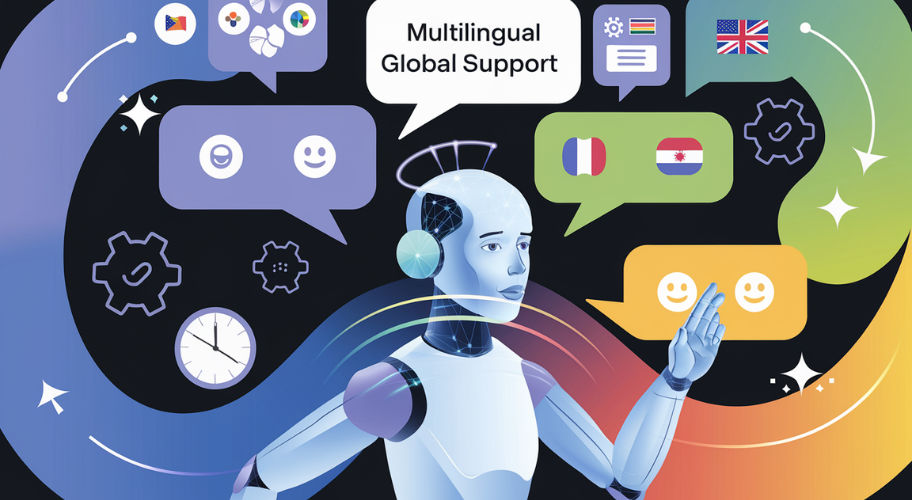
We envisioned an AI voice agent platform built specifically for the Indian market—understanding our languages, accents, business practices, and price sensitivity. A solution that could democratize 24/7 customer service, making enterprise-grade conversational AI accessible to the smallest businesses.
Our vision: Enable every Indian business, regardless of size, to provide world-class voice-based customer service in the customer’s preferred language, at any time of day.
Building voice agents required solving complex technical, linguistic, and user experience challenges over 14 months of intensive development.
We conducted extensive field research across multiple industries and geographies.
What we discovered:
Roadside assistance providers needed to capture location, vehicle details, and issue description instantly—every minute of delay in emergency situations mattered. Healthcare clinics needed appointment booking with date/time handling in regional languages. Retail businesses needed product inquiry handling with inventory checking capabilities. Service businesses needed call routing based on urgency, service type, and location.
Critical insight: Businesses didn’t just need a voice bot—they needed an intelligent assistant that understood their specific workflow, integrated with their existing systems, and could handle the nuances of their industry.
Language requirements were complex: Beyond just supporting Hindi, Tamil, Telugu, and other major languages, we needed to handle code-mixing, understand regional dialects, and process varying accents across rural and urban speakers.
Requirements we defined:
We built the core AI infrastructure capable of natural conversation in multiple Indian languages.
Speech Recognition Engine
We integrated and fine-tuned speech-to-text models specifically for Indian languages and accents:
Multi-language ASR (Automatic Speech Recognition):
Rather than relying solely on generic models, we fine-tuned speech recognition on Indian accent datasets. We collected thousands of hours of conversational audio in Hindi, Tamil, Telugu, Bengali, Marathi, Gujarati, Kannada, Malayalam, and Punjabi—covering urban and rural accents.
Code-mixing handling:
One of the hardest challenges was handling code-mixing—when speakers mix Hindi and English, or Tamil and English in the same sentence. We trained models to seamlessly process “Mera order kab deliver hoga?” or “நான் appointment book பண்ணனும்” without confusion.
Accent adaptation:
Indian English itself has regional variations. Our system learned to understand Kerala English, Bengali English, and Punjabi English with equal accuracy.
Natural Language Understanding (NLU)
We developed intent classification and entity extraction models:
Intent Recognition:
The system identifies what the caller wants—booking an appointment, checking order status, reporting an emergency, asking about pricing, requesting a callback—regardless of how they phrase it.
Entity Extraction:
From natural conversation, the AI extracts structured data: dates, times, phone numbers, locations, vehicle registration numbers, product names, quantities. “Tomorrow evening 5 baje” is understood as a specific date-time. “Juhu beach ke paas” is recognized as a location.
Context Management:
The AI maintains conversation context. If a caller says “What about Friday?” after discussing appointment times, the system understands they’re referring to an appointment on Friday, not asking about a different topic.
Conversational AI Architecture
Dynamic Response Generation:
Rather than scripted responses, our system generates contextually appropriate replies. It adapts tone based on urgency—calm and reassuring for healthcare, energetic for sales, professional for service businesses.
Multi-turn conversations:
The AI handles complex, back-and-forth conversations. “I want to book a tow truck.” “Which location?” “MG Road.” “What vehicle type?” “Sedan.” “We’ll send help in 15 minutes.” This feels natural, not robotic.
Sentiment analysis:
The system detects frustration, urgency, or satisfaction in the caller’s voice and adjusts accordingly. An angry customer gets empathy and immediate human escalation. A happy customer gets efficient self-service.
Making the AI sound human, not robotic, was critical for user acceptance.
Text-to-Speech (TTS) Optimization
Natural-sounding voices:
We integrated premium TTS engines and fine-tuned them for Indian languages. Voices sound warm and human, not mechanical. Male and female voice options match regional preferences.
Prosody and intonation:
The AI doesn’t speak in monotone. It uses natural pitch variations, pauses appropriately, and emphasizes important information. “Your order will arrive tomorrow” sounds reassuring, not flat.
Emotional intelligence:
When handling emergencies, the voice conveys urgency and empathy. When confirming appointments, it’s professional and clear. The tone matches the context.
Speed and latency:
Voice interactions needed to feel instant. We optimized the pipeline from speech recognition → understanding → decision → response generation → speech synthesis to complete in under 2 seconds. Conversations flow naturally without awkward pauses.
AI Voice Agent needed to do more than just talk—it needed to take action.
Workflow Automation
Appointment scheduling:
Integration with calendar systems allows the AI to check availability, book slots, send confirmation SMS, and set reminders—all within a single call.
Data capture and CRM sync:
Information collected during calls—customer details, service requests, issue descriptions—automatically flows into CRM systems. No manual data entry required.
Intelligent call routing:
The AI assesses urgency, service type, and availability before deciding whether to handle the call autonomously or transfer to a human agent. Emergency calls get immediate human attention. Routine inquiries are resolved by AI.
Third-party integrations:
APIs connect to payment gateways, inventory systems, GPS/location services, ticketing platforms, and communication tools (WhatsApp, SMS, email for follow-ups).
Analytics & Insights Dashboard
Real-time monitoring:
Business owners see live call activity—who’s calling, what they’re asking, how calls are being resolved.
Performance metrics:
Call volume trends, peak hours, average call duration, resolution rates, customer satisfaction scores, common queries, and areas requiring human intervention.
Call transcriptions and recordings:
Every conversation is logged, transcribed, and searchable. Business owners can review specific calls, identify training needs, and understand customer pain points.
Reporting:
Weekly and monthly reports showing business insights—most requested services, geographic distribution of calls, conversion rates from inquiry to booking.
We designed the platform for business owners who aren’t tech experts.
5-Minute Setup Process
Account creation:
Simple sign-up with business details. No coding or technical knowledge required.
Agent customization:
Business owners specify what their AI should say, how it should route calls, what information to collect, and when to transfer to humans. Template-based configuration for common industries (roadside assistance, healthcare clinics, retail, salons, restaurants).
Phone number integration:
Either forward existing business numbers to AI Voice Agent or get a new dedicated number. No hardware installation or complex telephony setup.
Testing and go-live:
Test calls allow businesses to experience their AI agent before making it live. Adjustments are made through simple interface updates.
Mobile and Web Dashboard
Accessible anywhere:
Business owners monitor and manage their AI agent from mobile apps or web browsers. Real-time alerts for important calls or issues.
Simple controls:
Pause/resume agent, update responses, modify routing rules, view analytics—all through intuitive interfaces.
We fine-tuned the platform for Indian business realities.
Pricing for Indian market:
Flexible pricing models—monthly subscription for predictable costs or pay-per-minute for variable usage. Free trial with 30 minutes of calling time to experience the platform risk-free.
Regional customization:
Templates and examples specific to Indian business types—from kiranas to clinics, from salons to service centers.
Compliance and security:
Built with data privacy regulations in mind. Secure storage, encrypted calls, and GDPR compliance even though many Indian businesses don’t require it yet—future-proofing the platform.
Low-bandwidth optimization:
Engineered to work efficiently even on moderate internet connections, understanding that many Indian businesses don’t have enterprise-grade connectivity.
Case Study 1: Roadside Assistance Provider
A mid-sized roadside assistance company struggled with missed calls during peak evening hours and overnight emergencies.
Before:
With agents :
Results:
Case Study 2: Multi-Specialty Clinic
A healthcare clinic with 8 doctors needed to manage appointment bookings across multiple specializations and time slots.
Before:
With Tool:
Results:
Case Study 3: E-commerce Fashion Retailer
An online clothing retailer received high call volumes for order tracking, size queries, and return requests.
Before:
With AI Agent:
Results:
Challenge 1: Indian Accent Diversity
Indian English alone has dozens of regional variations. Hindi spoken in Delhi differs from Hindi in Mumbai. We collected diverse audio datasets and used transfer learning to fine-tune ASR models, achieving 96%+ accuracy even with strong regional accents.
Challenge 2: Code-Mixing Complexity
Speakers fluidly mix languages mid-sentence. Traditional models struggled with “Mujhe ek appointment chahiye for tomorrow.” We developed hybrid language models that process mixed-language input as natural, not errors.
Challenge 3: Real-Time Latency
Voice conversations require sub-2-second response times to feel natural. We optimized every component—speech recognition, understanding, decision-making, response generation, and synthesis—through model quantization, caching, and edge computing.
Challenge 4: Natural Conversation Flow
Early versions felt robotic—the AI waited for silence before responding, causing awkward pauses. We implemented voice activity detection (VAD) and turn-taking models that understand natural conversation rhythm, including interruptions and overlapping speech.
Challenge 5: Business Logic Complexity
Each industry had unique requirements—appointment scheduling with resource constraints, inventory checking with real-time updates, emergency routing with urgency classification. We built a flexible workflow engine allowing custom logic without requiring programming skills.
Challenge 6: Integration with Legacy Systems
Many Indian SMEs use basic tools—WhatsApp for customer communication, Excel for appointments, manual processes. We created simple integration methods and even manual data sync options for businesses without APIs.
AI Voice Agent is continuously improving based on real-world usage and customer feedback.
Recent Enhancements:
Current Development:
Long-term Vision:
Building AI Voice Agent reinforced principles guiding our approach to product development:
6. Business Outcomes Focus
Success isn’t measured by AI accuracy alone—it’s measured by business impact. Did missed calls decrease? Did customer satisfaction improve? Did revenue increase?
AI Voice Agent represents our evolution from IT services company to AI product innovator.
What this demonstrates:
Deep AI/ML Expertise:
We can build production-grade NLP and speech AI systems, not just integrate third-party APIs.
Market Understanding:
We identified an underserved segment (Indian SMEs) and built specifically for their needs, pricing, and workflows.
Full-Stack Product Capability:
From AI models to user interfaces, infrastructure to customer success—we handle the entire product lifecycle.
Scalability:
We architect and operate platforms serving thousands of concurrent users with real-time performance requirements.
Business Model Innovation:
We created pricing and packaging that works for Indian businesses while building a sustainable SaaS revenue model.
Customer-Centric Iteration:
We continuously enhance based on user feedback, demonstrating long-term product commitment beyond initial launch.
Export Intelligence Platform represents our evolution from service provider to product company.
What it demonstrates:
Technical Capability:
We can build complex, data-intensive, AI-powered platforms from scratch—not just integrate existing tools.
Product Thinking:
We understand product management, user experience, market positioning, and go-to-market strategy beyond just coding.
Domain Expertise:
We deeply understand specific industry challenges and can build solutions that genuinely address them.
Scalability:
We architect and operate platforms serving thousands of users with high availability and performance.
Innovation:
We develop proprietary algorithms and approaches, not just implement standard patterns.
Commitment:
We invest in R&D, ongoing enhancement, and long-term platform evolution—not just project delivery.
AI Voice Agent contributes to the broader digital transformation of Indian SMEs.
By making enterprise-grade conversational AI affordable and accessible, we’re helping businesses that could never afford 24/7 staff or expensive call centers compete with larger companies on customer service quality.
Impact beyond technology:
This Agent represents our commitment to building AI technology that creates real economic value for Indian businesses while advancing conversational AI capabilities.
For enterprises and custom requirements:
Our team can build specialized voice AI solutions tailored to your specific industry, workflows, and scale requirements.
Revolutionizing Customer Communication with Multilingual AI Voice Technology
AI / ML
Josefin H. Smith
21 January,2026
4 Month
Our team will answer all your questions. we ensure a quick response.
We don’t just provide services, we become your technology innovation partner. AI solutions that think. Security systems that protect. Software that scales. Every project, every phase, every detail handled with precision. From discovery and design to development, deployment, and dedicated support – we’re with you at every step, driving continuous innovation.
Copyright © 2025 All Rights Reserved.